Friday, October 11, 2019

The Lux Life

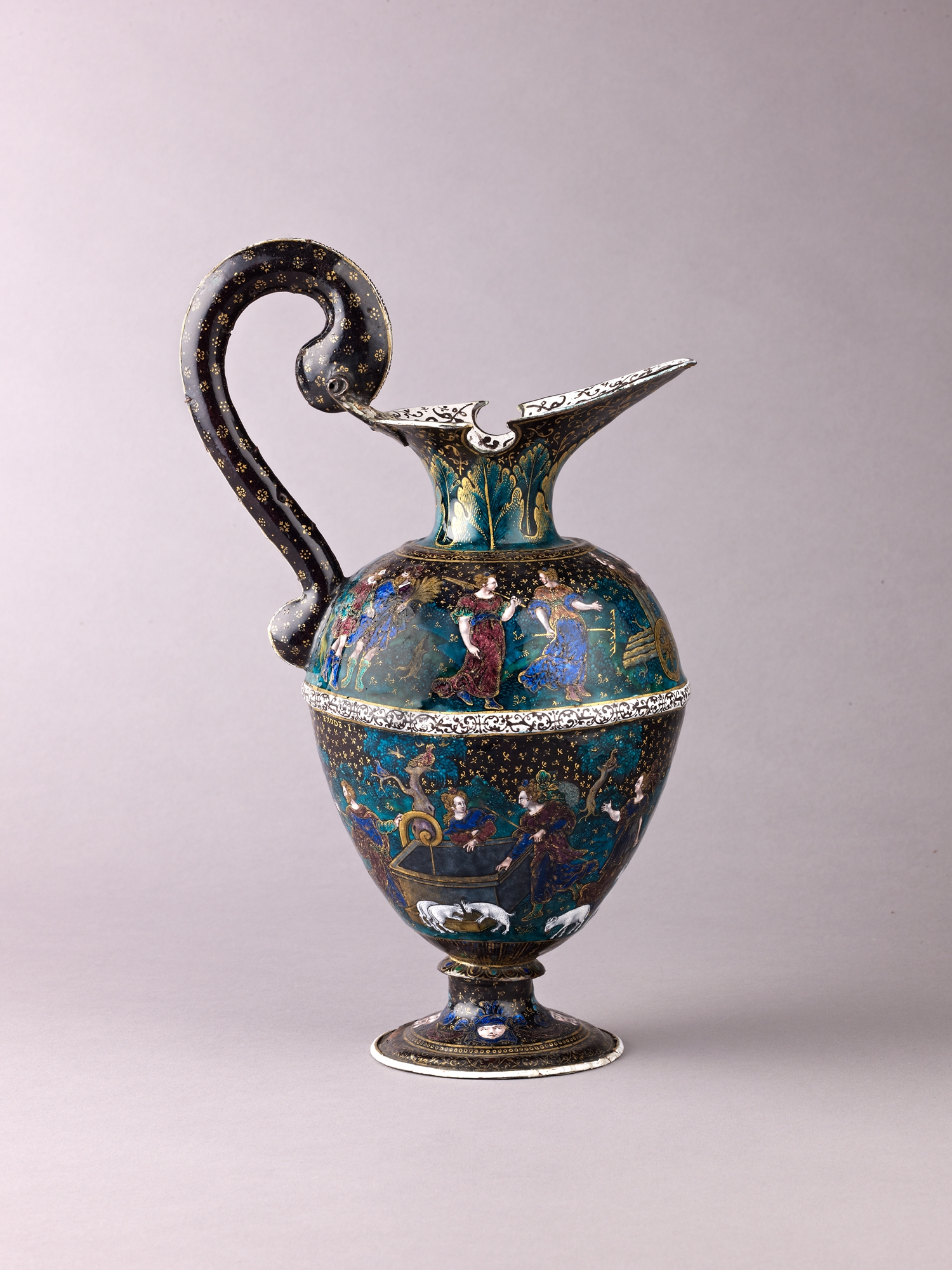
Limoge. That would just oooooooozes luxury. Artisans in the French city of Limoge have been producing enamel pieces for hundreds of years. From the 12th century until the late 14th century the area was particularly know for producing religious items such as reliquaries. The work fell out of popularity for a while but in the late 15th century, with the advent of the French Renaissance, there was a resurgence in the popularity. The types of items being produced had shifted to beautiful plates, plaques and ewers. These pieces would be decorated with narrative scenes and elaborate borders.

Image result for Suzanne de Court enamel ewer
Lehman Ewer, Suzanne de Court

Before we go much further it would probably be appropriate to discuss what enameling is. At the most basic, enameling is glass fused to metal at high heat. "Vitreous enamels are finely ground glass, like fine sand (or even more finely pulverized and mixed with an oil or adhesive). They may be opaque or transparent; their colors come from the use of various oxides. Enamels are similar to ceramic glazes, except that, whereas glazes are in a raw state when applied to ceramics and go through chemical changes in the firing process that smelt them into glass, enamels have already been smelted. The firing process simply melts them and fuses them to the metal." Pat Musick, The Enameling Process.

Those responsible for producing enameled items seem to be part artist, part chemist and part engineer. It is important to understand that these artists had to be trained in painting and metalsmithing. The de Court family were masters at the enameling process, and none better than
Suzanne de Court.

https://upload.wikimedia.org/wikipedia/commons/thumb/6/6a/Suzanne_de_Court_-_Oval_Plaque_with_the_Annunciation_-_Walters_44191.jpg/220px-Suzanne_de_Court_-_Oval_Plaque_with_the_Annunciation_-_Walters_44191.jpg
Annunciation Plaque, Suzanne de Court
Little is known of the life of the personnel life of Suzanne de Court. Some historians say that she was the daughter of Jean de Court, a well known enameller of Renaissance France. Others say she was Jean's sister. Still others suggest that she actually married into the de Court family. We may never know.

What is known is that Suzanne lived and worked in Limoge, France and it appears that she was the first woman to become known for her enameling ability. In a time when few artists signed their work we know that Suzanne regularly added either her initials, or full name to her finished pieces. Maybe Suzanne wanted to make sure the world knew that she was a woman and that she was the artist. Or, she may have signed them because she was the owner of the workshop that produced the items.

The workshops that produced enamel work were usually family owned. Guilds were also powerful in France during this time so, it stands to reason that Suzanne would have been a guild member, and may have been a master in the guild house.


+++++++++++++++++++
Selected Sources
d’Amecourt, Isabelle. What I’ve learned: Isabelle d’Amécourt on European Sculpture and Works of Art. https://www.christies.com/features/What-Ive-learned-Isabelle-dAmecourt-8912-1.aspx

Crichton-Miller, Emma. Collectors remain enamoured with Limoges enamels. https://www.apollo-magazine.com/collectors-remain-enamoured-with-limoges-enamels/

Drayman-Weisser, Terry. The Early Painted Enamels of Limoges in the Walters Art Museum: Historical Context and Observations on Past Treatments https://cool.conservation-us.org/jaic/articles/jaic42-02-007_2.html

Thursday, October 3, 2019

Mistress of a Guild - What?!?!?!


In western Europe artists were often part of the guild structure. The Guild of St. Luke was one of the more successful, having guild houses in many western European cities. The Guild of St. Luke was especially strong in the Netherlands. First mentioned in city records in the late 14th century, the guild in Antwerp may have been the guilds founding city. Bruges, Haarlem, and other norther European cites had active Guilds of St Luke as well. It is interesting to note that the guild system was not particularly strong in Italy. The artistic community in Italy seems to have moved from a simple master/apprentice arrangement to an academy system.

Image result for caterina van hemessen paintings
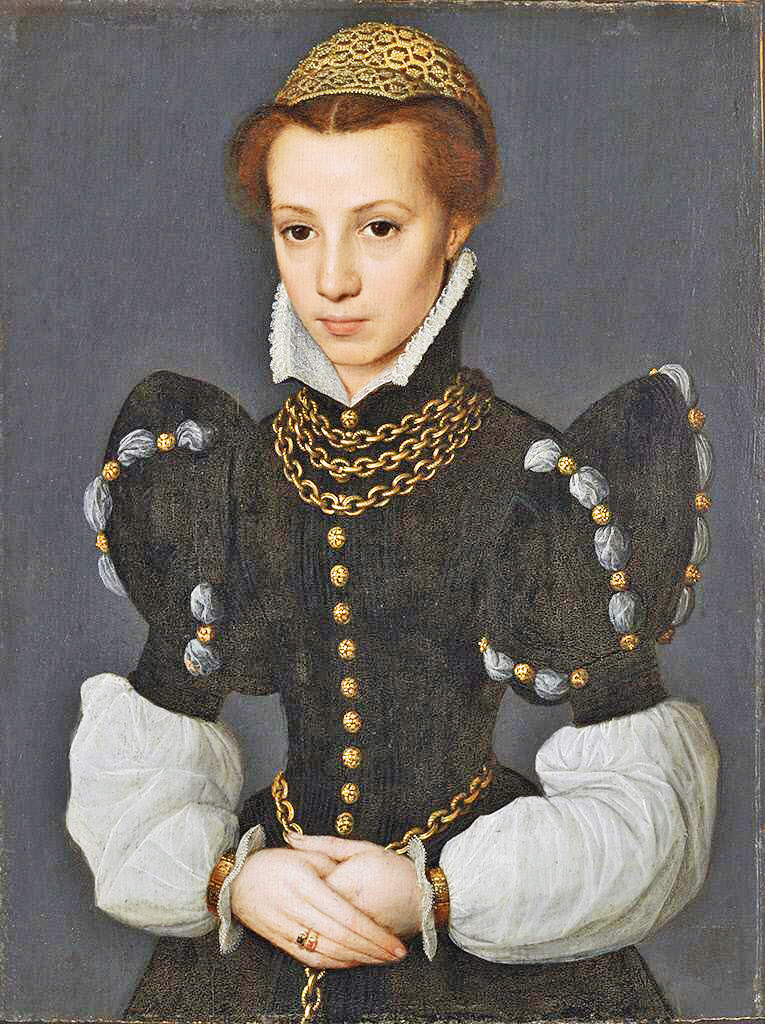
Portrait of a Young Lady, oil on panel
The Guild of St. Luke had very strict guidelines for moving through the guild from apprentice to master. An apprentice (and their family) would agree to undergo training that would last from four to six years. During that time the apprentice would learn all the skills necessary to be a successful artist, not just painting. They would study the preparation of pigments, stretching canvas, preparing the canvas for painting, etc. Eventually they would be allowed to work on one of the masters paintings, perhaps filling in a landscape, or working on a supporting character. After a period of time the apprentice would be given the opportunity to create a masterpiece. If successful they would be allowed to become a journeyman in the guild; if not they had to wait 58 weeks before they could try again. Journeymen could work for any master in the guild and this period usually lasted a year or two. During this time they would refine their skill, and might even begin signing some of their work. Finally the journeyman would make some sort of payment to the guild and would be recognized as a free Master, able to sell their own paintings and take on their own students.

In the Netherlands and northern France women experienced a bit more freedom than in other parts of Europe and we find many in an artistic trade. By the late 15th century as many as 25% of the members of the Guild of Saint Luke in Bruges were women. Several successful artists come from this time and area, the first of which was Caterina van Hemessen.

Caterina van Hemessen (1528 - 1567)  was born in Antwerp. She was a daughter of a well-known Mannerist painter, Jan Sanders van Hemessen. She learned to paint from her father and was known to have collaborated with him. Queen Mary of Hungary, Regent of the Low Countries, was her main patron and supporter.
Self Portrait, oil on panel, 12.6 in. x 9.84 in.

Caterina was regarded as a successful painter in her time. She was a portraitist; painting with oil on panel, most of her works were fairly small. Her subjects were wealthy patrons, usually painted against a plain dark background.

It is not clear when Caterina became a Master in the Guild of St. Luke. What is known is that she was the first woman to achieve that status and that she took at least three students.

Another first for Caterina was her most well known painting, Self Portrait. Many scholars believe that this is the first self-portrait of an artist, of either gender, depicted seated at an easel. This painting shows Caterina sitting at an easel, painting. It looks as though the viewer has entered the room just in time to see Caterina make that first stroke. Mahl stick in place, palette and brushes at the ready, we feel as though we've interrupted her. But, she's not upset, just patiently waiting our next question.
++++++++++++++++++++++

Selected Sources

Bois, Danuta, Distinguished Women of Past and Present; Caterina van Hemessen. http://www.distinguishedwomen.com/biographies/vanhemessen-c.html

Kleiner, Fred S. Gardner's Art through the Ages: The Western Perspective

Scotterjoseph, Irene. The Athenaeum - Caterina Van Hemessen.  https://www.the-athenaeum.org/people/detail.php?ID=6188

Janson, Jonathan. Essential Vermeer 3.0 - The Guild of Saint Luke of Delft  http://www.essentialvermeer.com/saint_luke's_guild_delft.html#.XY4o60ZKiUk

Thursday, September 26, 2019

Thinking Big

Related image
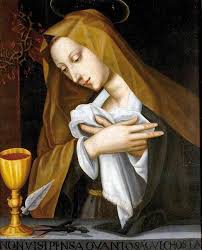
Plautilla Nelli, Pained Madonna

Florence, early 16th century. This is the center of the art world. While several important renaissance artists were working in Rome, buy the beginning of the 16th century Florence had risen to become the capital of the art world. Artists like Cimabue and Giotto had began to break away from the Byzantine style of art which was somewhat flat and stylized to producing works where the subjects were much more life like. Their work began the transition to what we think of today as Italian Renaissance art. Many artists followed them, creating not just beautiful work, but a wealth of information about portraying the human form, linear perspective, and understanding the play of light across a subject.

This is the world that our subject for today's blog is born into. Plautilla Nelli was born to a wealthy fabric merchant in 1524. Both she and her sister, Costanza, also became a nun. Nelli became a painter and Costanza became a writer.

Nelli is reported to have been self taught. Fortunately her convent of Santa Caterina da Siena was not fully cloistered, so Nelli could have had access to live models. She ran a working studio in the convent that where other artists would regularly visit. She inherited the drawings of Fra Bartolomeo, a prominent painter of the time. Artists such as Perugino, Andrea del Sarto and Giovanni Antonio Sogliano may have influenced Nelli.

Her studio was likely a gathering place for her patrons. She was apparently well known and her paintings were in demand. In his Lives of Artists, Giorgio Vasari wrote that Nelli “had so many works in the houses of gentlemen that it would be tedious to speak of them all.”

In my mind there are three things that elevate Nelli to Bad Ass Status; the courage to show her subjects feelings, the definite feminine point of view, and the size of some of her work.

Plautilla Nelli Last Super

Subjects in Nelli's paintings appear to be very much present in the moment. Look at her Last Supper.  In the center Jesus lovingly comforts an apostle. The third apostle to the right appears concerned, thoughtful. Three apostles on the left are in deep, somewhat agitated conversation. You can almost hear what they are saying.


Image may contain: 7 people, people sitting
Plautilla Nelli, Lamentation
In her Lamentation you can almost feel the despair of the mourners. The women's noses are red from weeping; their posture betrays their anguish. These are women who are heart broken. In the background we see three men, one caught up in the sadness of the situation, the other two, more stoic and removed from the scene. In this painting Nelli portrays the pain and suffering of women in a way that it had not been seen before. You can see that suffering in the face of the Pained Madonna (above).

I believe Nelli also used size as a way to convey the messages behind her paintings. The Lamintation is nine and a half feet tall and six feet ten inches wide. During Nellis time it was displayed in the convent in such a way that the viewer would have been on eye level with the weeping mourners. This would have been a powerful way to draw the viewer into the scene.

Nelli's Last Supper is so large that the viewer could feel as though they are sitting at the table. At 23 x 6.5 feet it is the largest painted work by an early female artist. I think about what it would have taken to produce such a work. The largest painting I've ever undertaken was four feet by five feet and it was exhausting!! I can imagine Nelli day after day working on the images; climbing a ladder to add the tiny detail on the serving bowls or sitting on a scaffold to add the decorative trim on Jesus collar.

We may never know Nelli's thought process or why she made the choices she did but, thankfully, we have many of her works to admire and be inspired by.

+++++
Additional Information on the Last Supper. This magnificent painting was rolled up and in storage from 1808 until 1853. During this time it sustained significant damage.  The restoration was developed by The Advancing Women Artists Foundation and The Florence Committee of the National Museum of Women in the Arts and is expected to be completed in October of 2019.

+++++
Selected References

Advancing Women Artists Foundation  http://advancingwomenartists.org/artists/plautilla-nelli

Plautilla Nelli – the Nun who started a Women’s Art Movement in Florence in the 1500’s – now stronger than ever. https://www.beyondtheyalladog.com/2017/03/plautilla-nelli-the-nun-who-started-a-womens-art-movement-in-florence-in-the-1500s-now-stronger-than-ever/

Garrard, Mary D. Repositioning Plautilla Nelli’s Lamentation. Essay. In Conversations: An Online Journal of the Center for the Study of Material and Visual Cultures of Religion (2014). doi:10.22332/con.ess.2014.1

Michalska, Magda . Restoration of “Last Supper” You Had No Idea Existed. https://www.dailyartmagazine.com/restoration-of-last-supper-by-plautilla-nelli/

+++++

On a side note - if you aren't familiar with the Web Gallery of Art I'd encourage you to visit. It's a great resource that allows you to enlarge the paintings so that you can view detail.
Thursday, September 19, 2019

A Royal Paintrix

It is the beginning of the 16th century and the Renaissance has come to England. This is a time of explosive growth in the arts. England's Renaissance is dominated by literature and music, with the visual arts lagging behind a bit. However, England did make a significant contribution to the visual arts arena with the advancement of the miniature portrait. Leading this work was Levina Teerlinc.

Levina was born in 1520 in Flanders to Simon Benninck (maybe Bening), a well known manuscript painter. Levina was an eldest of five daughters, so she was trained in painting from an early age. Simmon probably expected that she would take over the family business. Things progress nicely for Levina. By the age of 20 or so she is beginning to become known for her skill.  In 1545, she married George Teerlinc, and the couple eventually had a son named Marcus.

In that same year Levina received a job offer from the English court. Henry VIII was inviting her to England to become the 'royal paintrix'. Why Henry selected Levina is not known; what is known is that royal portraits of this time were not just fine art, but works of propaganda. Having a portrait painter in the Royal Household was necessary to a monarch's public relations campaign. 

Portrait of Elizabeth I
by Levina Teerlinc, c. 1565


Levinia was not just any portrait painter however. She was a miniaturist. In the early 16th century this was an emerging art form. These were tiny paintings - often no more than two inches in height - of people  or landscapes. A person might have a portrait painted of, or for, a loved one. The portrait would be carried on the person of the owner, or could be mounted in a piece of jewelry, such as a locket. The paintings were executed on vellum, or sometimes ivory,  using watercolors. Since Levina came from a background as a manuscript painter, she was perfectly suited to developing this new art form. 


An Elizabethan Maundy,
miniature by Levina Teerlinc, c. 1560
Levina's life is pretty drama free. She and George move to London in 1546 where she works steadily until her death in 1576. She is the court painter to Henry VIII, Edward VI, Mary I, and Elizabeth I.  Lodovico Guicciardini a 16th century Italian art historian reported that Levinia was paid significantly better than the former court painter, Hans Holbien the Younger.

It is interesting to me that Levina was trained in a very traditional art form, but became a trail blazer in an emerging art form. Pretty bad-ass if your ask me!

Did you learn something new? Have you ever painted a miniature or are you inspired to try a miniature on your own? Tell me about it below!

Friday, September 13, 2019

Properzia's Passion Pit

Whew - I'm glad to see that this week we are firmly in the Italian Renaissance! Also, this week we see a shift to women that worked as artists out side of the convent. The subject of this post - Properzia de' Rossi - is notable for being the first woman sculptor - an artistic trade that was generally considered to be for men only.

Properzia's life was filled with opportunity, drama, acclaim and despair. She was born in Bologna in 1490 to a notary named Giovanni Martino Rossi da Modena. As a woman of the Renaissance, Properzia was well educated. She studied painting, music, dance, poetry, and classical literature. Later she studied drawing and engraving at the University of Bologna under Marcantonio Raimondi. None of these pursuits caught her attention until one day she decided to try her hand at sculpture. She began creating small but intricate works of art on apricot, peach, and cherry stones. The subjects of these tiny carvings were often religious; the most famous was her "Crucifixion". The Crucifixion is carved in a peach pit. Yes, you read that correctly - with the peach pit split open and the scenes carved inside.


Image result for Properzia de' Rossi
Properzia's Passion Pit
Legend has it that Properzia was told that no one would take her seriously as a sculptor and long as she was working in miniature. I am somewhat suspect whether this is true, but the facts show that sometime around 1520 she began to work on a bigger scale - and in marble. This was frowned on by a famous writer of the time, Giorgio Vasari. Vasari thought that women were too weak for the art form, it was a decidedly masculine practice. His exact quote was: "Sculpting is not an art form that women should attempt."


Well Giorgio, Properzia did attempt sculpting. Not only did she attempt it, she stood toe to toe with her male counterparts. She was commissioned to decorate the altar of Santa Maria del Baraccano in Bologna and won a competition to produce marble sculpture for the Basilica of San Petronio in Bologna.


Basilica San Petronio Bologna
Basilica of San Petronio, Bologna 

It was while working on the Basillica that Properzia became acquainted with Anton Galeazzo Malvasia. Scholars differ on the nature of their relationship. Some say it was definitely a romance, while others suggest that Malvasia was more of a friend and patron.


Properzia found herself in a bit of trouble that involved Malvasia. There was a merchant of the city that lived next to Properzia and their gardens joined. Somehow the merchants garden sustained damage, and the merchant filed charges against Properzia. In the charge he refers to Properzia as Malvasia's mistress; Malvasia, of course denied the charge. Apparently all parties to the suit came to a amicable resolution, as the charges were soon dropped. Unfortunatley, because the charge was in writing, and notarized, Properzia has gone down in history as Malvasia's mistress, whether it is true or not.


On another occasion Properzia got into an altercation with a painter, Vincenzo Miola. Miola claimed that Properzia and another artist, Domenicno Francia, came to his home and attacked him. Miola claimed that during the attack Properzia scratched his face. This incident was also resolved quickly. After the initial complaint there are no other records of the proceedings. Some writers have suggested that Miola resented Properzi's talent, and was acting out of jealously.

By 1530 Properzia is found to be residing in the Ospedale della Morte, (Hospital of Death), gravely ill. It is not clear what her aliment was, although the Ospedale was noted for treating victims of the plague. She passed away in February of that year.


Properzia de' Rossi was described by her contemporaries as brilliant, fickle and untamable. Hummm...how else would a badass artist be described?

++++++++++++++++++++++++++++++++++++++++++

Donati, Silvia. 8 Things to Know about Bologna’s Basilica of San Petronio.
https://bolognauncovered.com/2016/08/18/8-things-to-know-about-bolognas-basilica-of-san-petronio/

Donati, Silvia. Bologna Uncovered. Three Notable Women Artists from Bologna. https://bolognauncovered.com/2017/03/04/three-notable-women-artists-from-bologna/

Frank, Priscilla. The Huffington Post. These Are The Revolutionary Women Artists Of The 15th Through 19th Centuries.

Ragg, Laura M. The women artists of Bologna.
https://babel.hathitrust.org/cgi/pt?id=uc1.32106007700112&view=1up&seq=214


Monday, September 9, 2019

Aristocratic Daughters


We think of nuns as living a secluded life, peacefully going about their daily prayers and rituals. However, at the threshold of the Italian Renaissance, the life of a nun offered a creative solution to women who wanted to pursue interests outside of keeping a home and raising children. For many, convent life meant an education and a the ability to be creative. The subjects of today's blog are such women.  
http://stevenwood.com/reflections/franciscan/images/0309-31.jpg
Madonna and Child attributed
 to Catherine de'Vigri

Catherine de’Vigri (8 September 1413 – 9 March 1463) was the daughter of an aristocratic Bolognese family. Her father was a diplomat at the court of Niccolo III d’Este in Ferrara. As a young girl Catherine became a maid of honor and and confidante of Princess Margherita d’Este. Along side the Princess, Catherine had access to an education. She also discovered that she particularly loved drawing and painting. 


Legend has it that when the Princess married she wanted Catherine to stay with her at court. However, Catherine begged the Princess and her family to allow her to join the convent. So, at the tender age of thirteen Catherine entered the convent of Corpus Domini at Ferrara. There she devoted herself to living a holy life. In the manuscript Le sette armi spirituali (The seven spiritual weapons) she describes several mystical visions and epiphanies. While at the convent she also dedicated herself to miniature painting and poetry. Her paintings were often of the Madonna and Child.

In nearby Florence Maria di Ormanno degli Albizzi (1428-1470), was born into an upper class family. The Medici's exiled Maria's family  from Florence in 1434, so in 1438 Maria entered the convent of Santa Caterina al Monte, known as San Gaggio, located outside of Florence. At San Gaggio the nuns formed an elite community, learned community. The scriptorium at San Gaggio was a busy place where the nuns copied their own breviaries and manuscripts . They were also active in the textiles industry and produced fine linens and gold thread.

Maria exhibited her badassery by painting a self portrait in a breviary that she signed and dated 1453. A scroll frames the portrait bearing Latin inscription describing her as "handmaid of God, daughter of Orman, and the writer of the book". What makes this painting particularly interesting is that Maria is looking into the eyes of the viewer. Refined quattrocento ladies during this period were normally painted in demure profile.

https://html1-f.scribdassets.com/7nli0j06tc65z9mn/images/5-c5ac337e58.jpg
Self Portrait. Maria di Ormanno degli Albizzi

In this painting Maria looks anything but demure. She seems straight forward, sure of herself and well...formidable. Every bit the badass she was.

Are you enjoying these posts? Is there an artist that should be included? Come on - be a badass and leave me a comment below!

++++++++++++++++++++++++++++++++++++++++++

The History of Painting Revisited: Caterina de Vigri 1413 – 1463. https://thehistoryofpaintingrevisited.weebly.com/caterina-de-vigri.html

Chernick, Karen. How Nuns Have Shaped the Course of Art History. https://historynewsnetwork.org/article/171090


Arthur, Kathleen G.  New Evidence for a Scribal-Nun’s Art Maria di Ormanno degli Albizzi at San Gaggio.  https://www.academia.edu/34910563/New_Evidence_for_a_Scribal-Nuns_Art_Maria_di_Ormanno_degli_Albizzi_at_San_Gaggio

Tuesday, September 3, 2019

Formidable

This being the fourth in a series I believe it's time to consider what it takes to be a "Bad-ass Woman Artist of the Middle Ages and Renaissance". Taken from the blog header a badass is defined as tough, intimidating or uncompromising. Another definition: of formidable strength or skill.

Said a different way, these artists were ready to challenge the norms of their time, and risk taking chances. I can imagine that for these artists being told no was only grounds for a good fight. Kora, Iaia and Thamar left woman's duties behind and went to work along side their fathers. Diemond had herself enclosed in a small cell in the monastery so that she could devote her life to her work.  Ende had the nerve to sign her work - a practice that was unheard of for women or men. Hildegard had to summon the courage to write about and illustrate her visions then take on the Pope to get her work recognized.

We add a few more badass's to the list today with Herrad of Landsberg, Claricia of Augsburg and Gisela of Kerzenbroeck. All three convent/monastary trained; all three from areas near the Rhine River Valley.

Herrad of Landsberg was a writer/illuminator from Hohenburg Abbey in the Vosges  mountains. Hohenburg Abbey was known during the 12th century for it's strict discipline but highly educated nuns. Herrad became the Abbess of Hohenburge Abbey in 1167 and around that same time began her great work, The Hortus Deliciarum (The Garden of Delights).

The Hortus  is a compendium of the knowledge of  the day. Herrad drew from Arab and classical writings then added her own poems, music, and illustrations. During the time few people outside Hohenburg Abbey knew of the Hortus and it is thought that it was written to be used by the novices at the Abbey to learn science and theology.

Hortus Deliciarum: Philosophy and the Seven Liberal Arts.
There are over 300 illustrations in the Hortus. One of the most striking illuminations is set up as in a rose window pattern containing female figures representing the seven Liberal Arts. Central to the pattern is  the allegorical figure of Lady Philosophy, beneath whom are two of her most famous practitioners (Socrates and Plato).
Similar to Hilgegard von Bingen, some scholars believe that Herrad may have simply overseen the work on the Hortus, while others believe that she created many of the illustrations herself. Since it was the job of the Abbess to ensure that the novices were trained in the scribal arts, I believe it is reasonable to think that Herrad and many others contributed to the book. Regardless, this is s beautiful work of art that was brought about by the work of a badass artist.


https://upload.wikimedia.org/wikipedia/commons/thumb/6/6c/German_-_Claricia_Psalter_-_Walters_W26_-_Obverse_Detail.jpg/800px-German_-_Claricia_Psalter_-_Walters_W26_-_Obverse_Detail.jpg
South German psalter showing Claricia 
swinging from the Q~ 12th C.

Claricia of Augsburg literally left her mark on the scribal world. Little is known about Claricia other than she had the audacity to not only sign her name to her work, but inserted a somewhat mischievous self portrait. Her self-portrait appears in a South German psalter of c. 1200. Here, she depicts herself as swinging from the tail of a letter Q. Because of the way she is dressed - in a close fitting dress and uncovered head  -- many believe that she was a lay person  that found work at the monastery.


Image result for Gisela of Kerzenbroeck
Self-portrait from the Codex Gisela


Gisela of Kerzenbroeck was a nun in the northern German city of Rulle. Most of Gisela's life was spent illustrating manuscripts. She is best known for the illuminations in the Codex Gisela. An inscription written by one of her contemporaries identifies her as the artist.  Inside the Codex, the pages for Christmas and Easter contain images of kneeling nuns, one of which has been identified as Gisela’s self-portrait.